Kerala: Hydrostatic Pressure
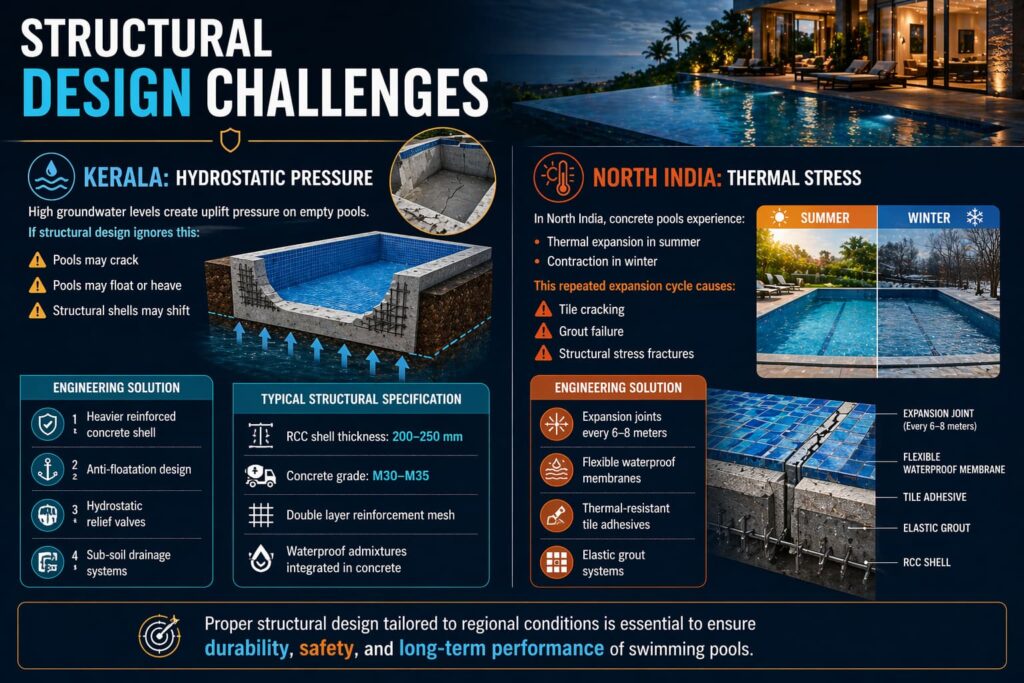
In Kerala, high groundwater levels create significant uplift pressure on empty swimming pools. If structural design does not account for this, it can lead to serious issues such as pool cracking, floating or heaving of the structure, and shifting of the structural shell.
Engineering Solution
- Heavier reinforced concrete shell
- Anti-floatation design
- Hydrostatic relief valves
- Sub-soil drainage systems
Typical Structural Specification
- RCC shell thickness: 200–250 mm
- Concrete grade: M30–M35
- Double layer reinforcement mesh
- Waterproof admixtures integrated in concrete
North India: Thermal Stress
In North India, concrete pools are exposed to significant temperature variations, leading to thermal expansion during summer and contraction during winter. This repeated cycle results in tile cracking, grout failure, and structural stress fractures over time.
Engineering Solution
- Expansion joints every 6–8 meters
- Flexible waterproof membranes
- Thermal-resistant tile adhesives
- Elastic grout systems
Proper structural design tailored to regional conditions is essential to ensure durability, safety, and long-term performance of swimming pools.