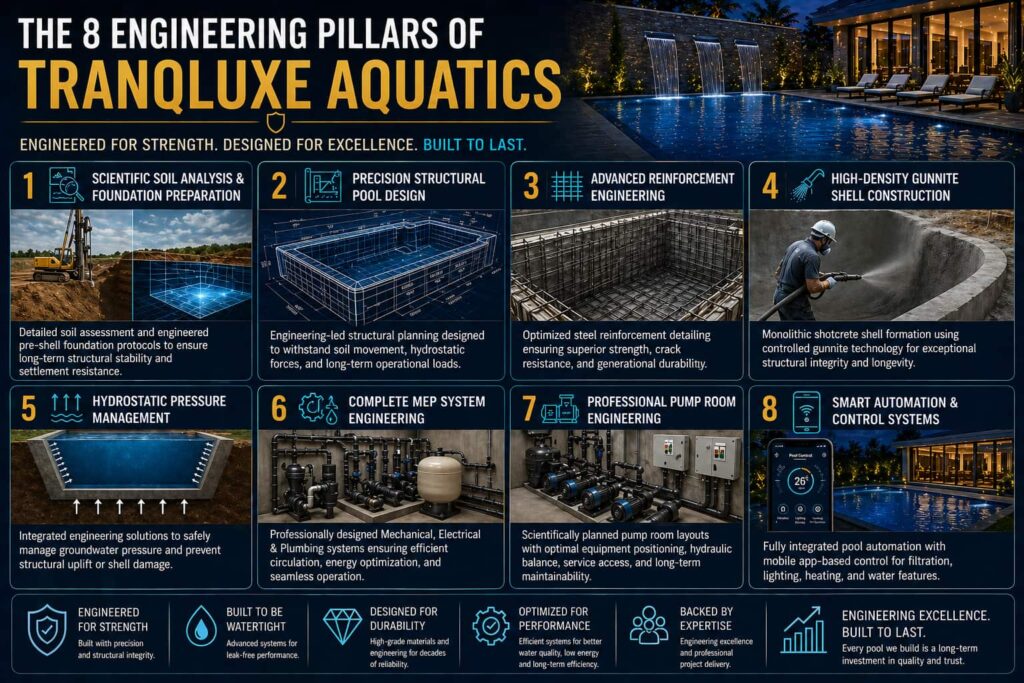
The 8 Engineering Pillars of TranqLuxe Aquatics
A well-engineered swimming pool is built on a strong foundation of precision, planning, and advanced systems. These pillars define the core engineering approach behind every TranqLuxe aquatic project.

A well-engineered swimming pool is built on a strong foundation of precision, planning, and advanced systems. These pillars define the core engineering approach behind every TranqLuxe aquatic project.
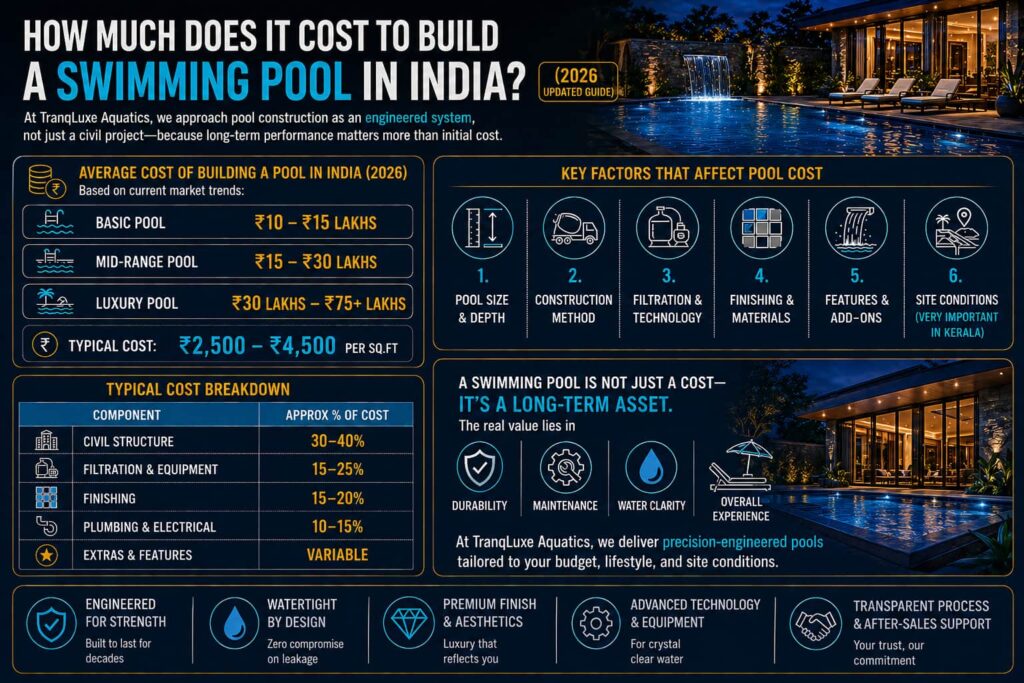
At TranqLuxe Aquatics, we approach pool construction as an engineered system, not just a civil project—because long-term performance matters more than initial cost.
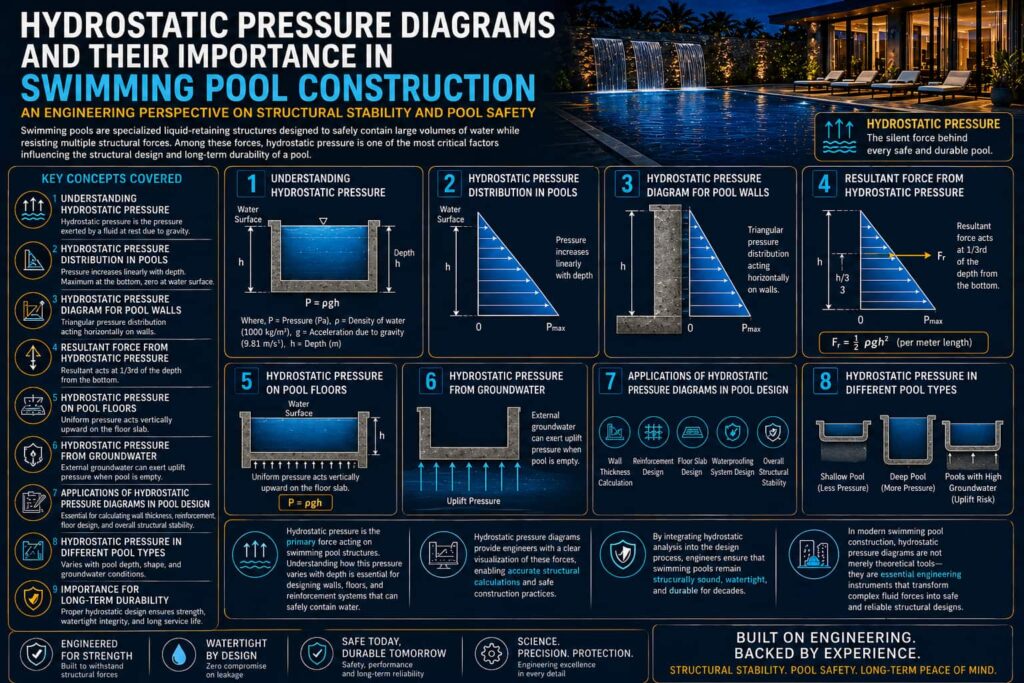
Swimming pools are specialized liquid-retaining structures designed to safely contain large volumes of water while resisting multiple structural forces. Among these forces, hydrostatic pressure is one of the most critical factors influencing the structural design and long-term durability of a pool.
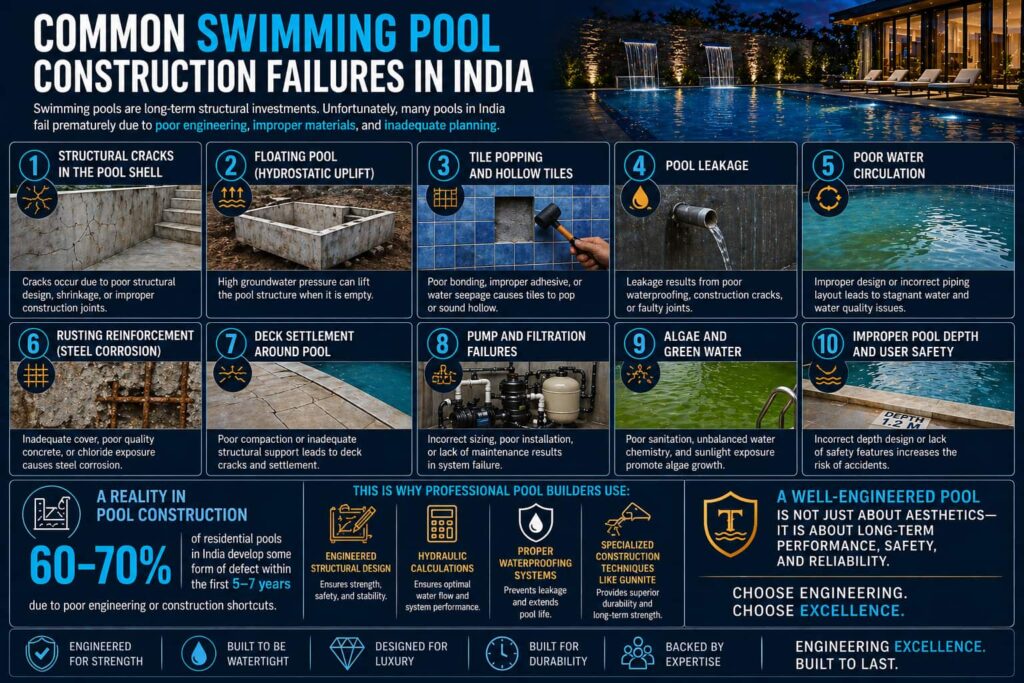
Swimming pool failures in India are more common than expected, especially in projects where proper engineering and construction practices are not followed.
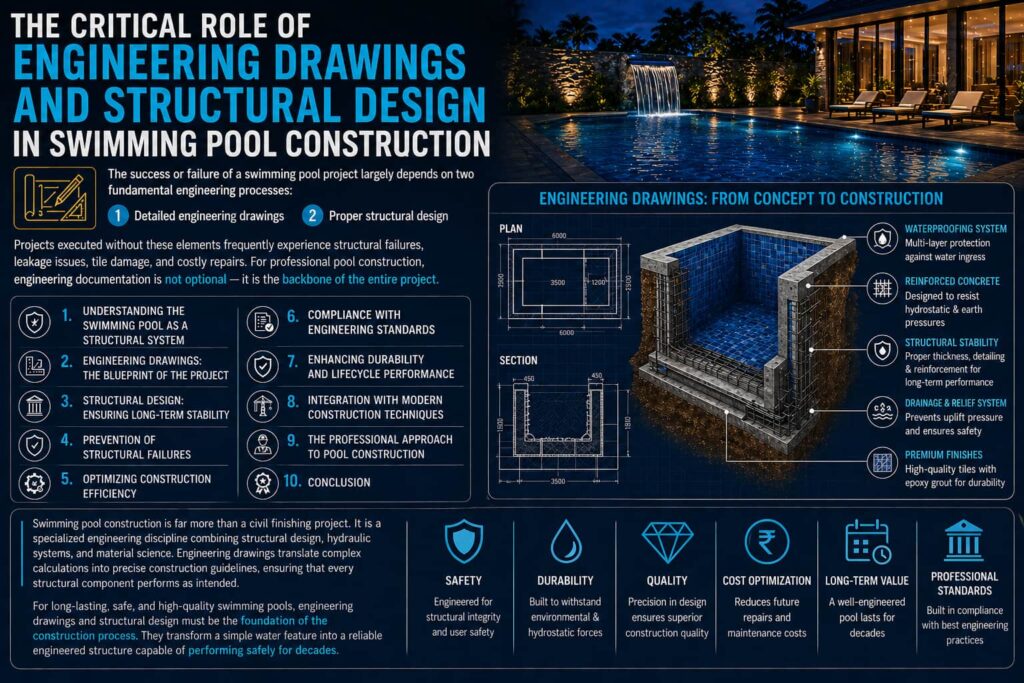
The success or failure of a swimming pool project largely depends on two fundamental engineering processes:
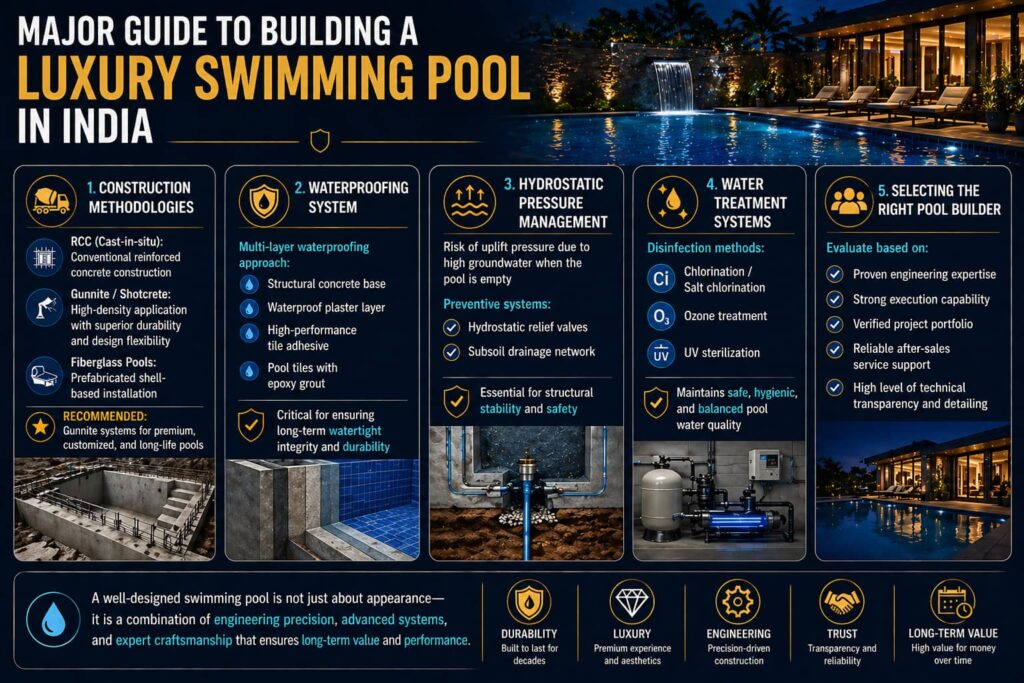
Building a luxury swimming pool requires a combination of the right construction methodology, engineering systems, and expert execution to ensure durability, safety, and long-term performance.

At TranqLuxe Aquatics, we specialize in engineered Gunnite (Shotcrete) swimming pools—the same technology used in many of the world’s most
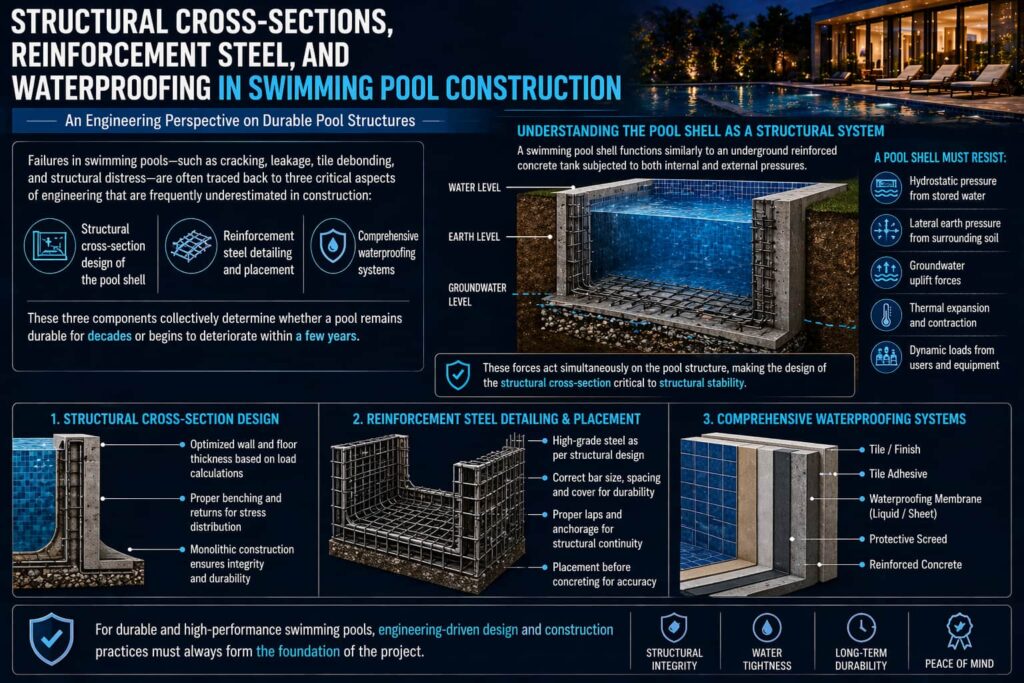
Failures in swimming pools—such as cracking, leakage, tile debonding, and structural distress—are often traced back to three critical aspects of engineering that are frequently underestimated in construction:
Structural cross-section design of the pool shell
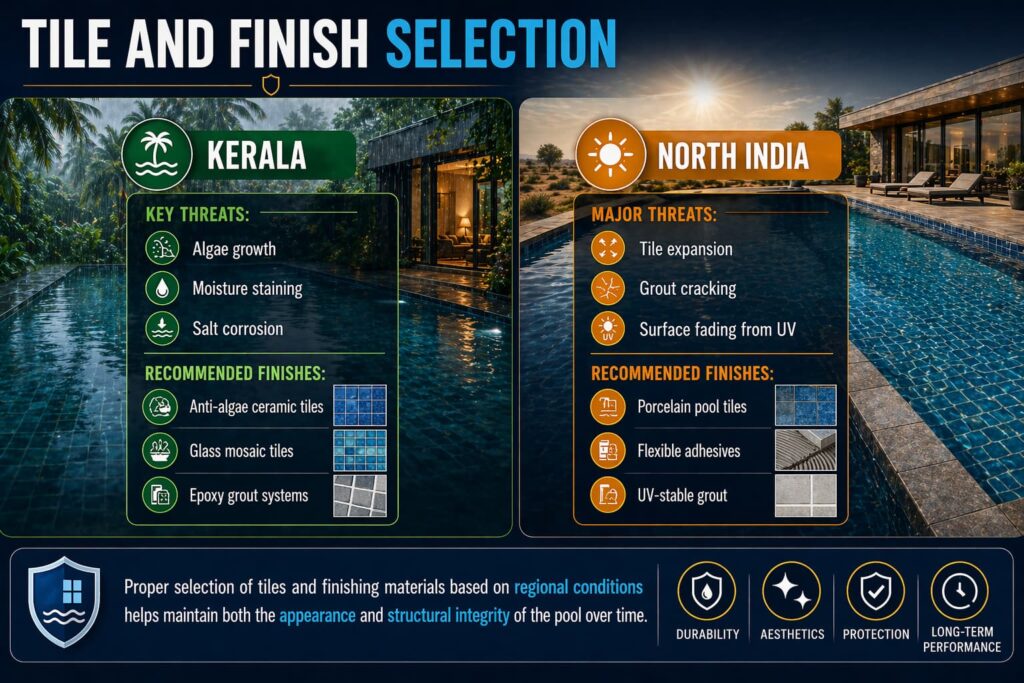
Choosing the right tiles and finishing materials is essential to ensure durability, aesthetics, and long-term performance of swimming pools across different regions.
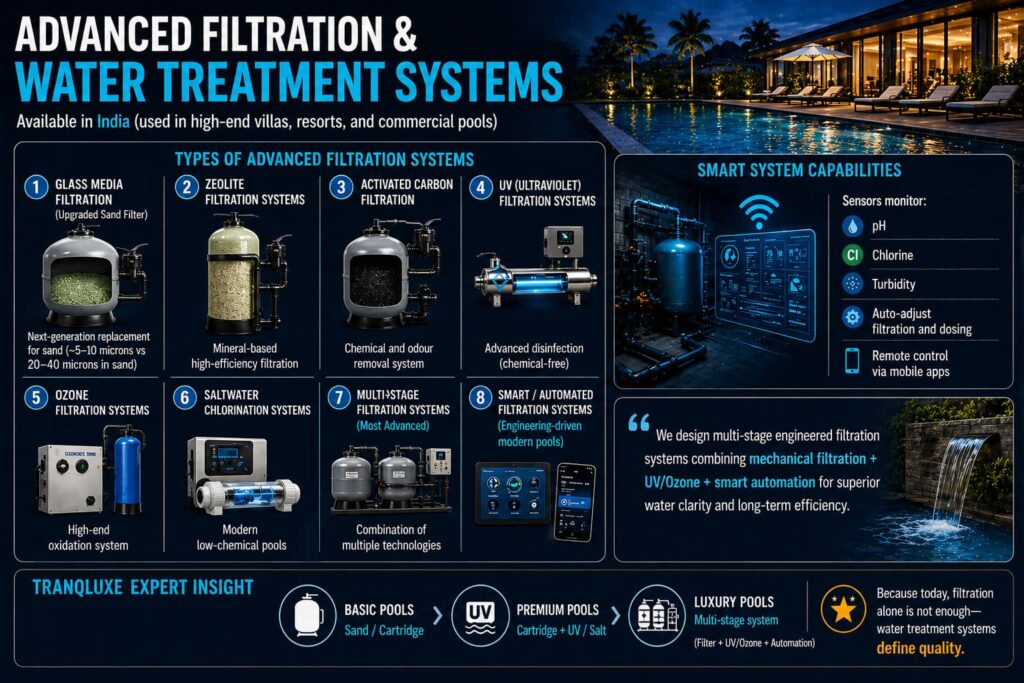
At TranqLuxe Aquatics, filtration systems are designed based on performance, efficiency, and durability—not just cost.
Why Filtration Matters
Removes dirt and impurities
Maintains water clarity
Reduces chemical usage
Prevents algae and bacteria